How to Get Your Business Recommended by ChatGPT and Other AI Search Tools
Direct answer
Help AI search tools understand your business through accurate, accessible, relevant and credible public information. Keep profiles consistent, answer customer questions, maintain technical SEO and demonstrate real expertise. These practices support discovery and informed decisions; they do not guarantee AI recommendations.
1. Your customer asks ChatGPT. Your business is missing.
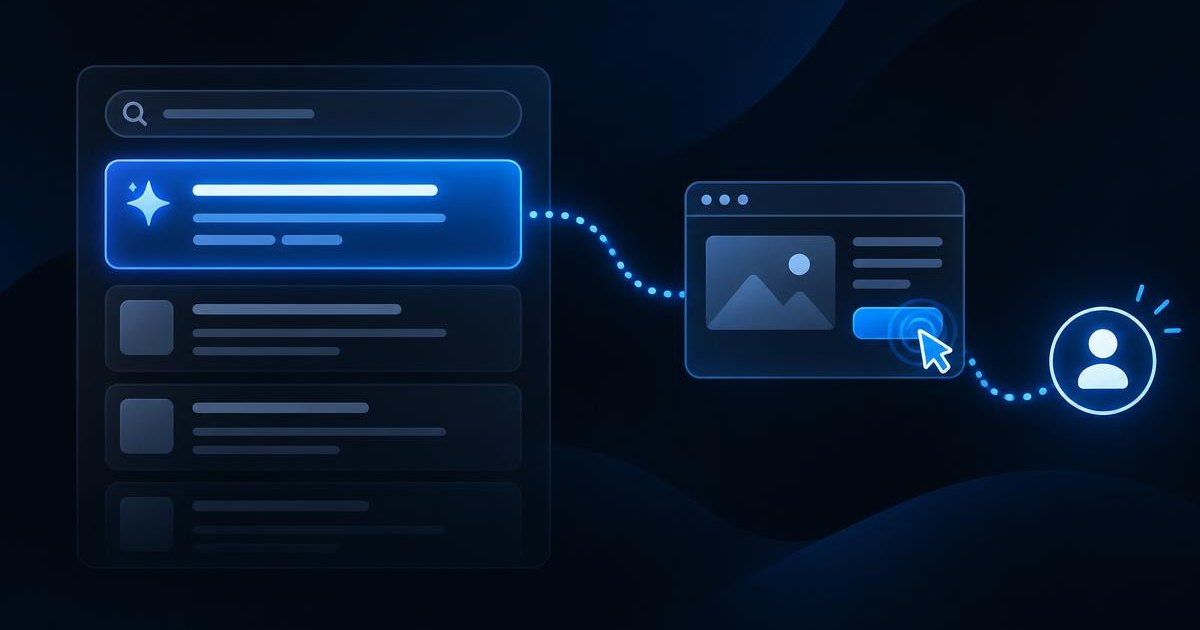
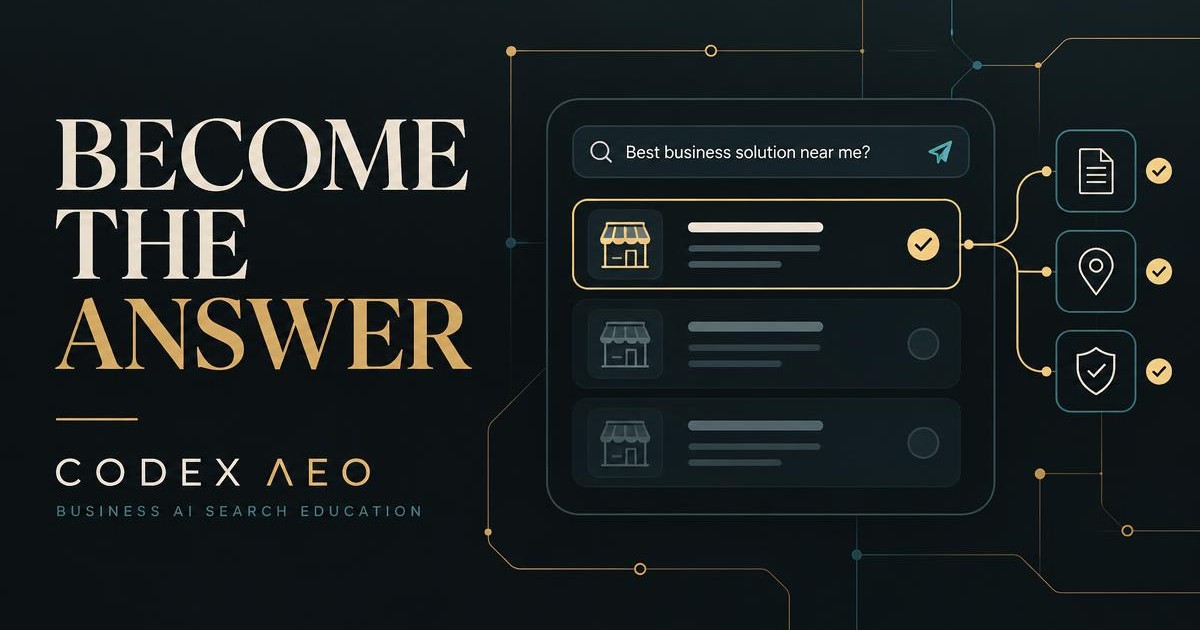
A homeowner asks ChatGPT, “Who can help me sell my home in Waldorf?” A business owner asks for an appointment-booking provider in Northern Virginia. The answer names several options—but not yours. You may have a useful service and a polished website, yet the public information about your business may not clearly answer that particular question.
That gap deserves investigation, not panic. AI answers vary with the question, location, available sources, product and time. One missing mention does not prove that your business is invisible everywhere. No agency, profile or website change can guarantee recommendations from ChatGPT, Google AI Overviews or Perplexity. The practical goal is to make your business easier to discover, understand and evaluate.
2. Quick answer: make your public information useful and trustworthy
Improve your chances of being considered by publishing accurate, accessible, relevant and credible information about what you do, whom you serve and why your business fits a customer’s needs. Keep business details consistent, answer real questions, remove technical barriers and support claims with evidence. These are foundations for visibility—not instructions that force an AI tool to recommend you.
Start with one high-value service. Can a visitor quickly identify your service area, qualifications, process, limitations and next step? If the answer is unclear, improve that page before producing dozens of new ones. Specific information helps customers compare options even when an AI referral never arrives.
3. SEO, AEO and GEO work together
- SEO—Search Engine Optimization—helps people and search engines discover and understand pages in conventional search.
- AEO—Answer Engine Optimization—organizes useful information around the questions people ask, with clear answers and supporting detail.
- GEO—Generative Engine Optimization—focuses on how a business or source may be represented, cited or discussed in generated answers.
These are complementary working labels, not three separate ranking systems you can control. A question-first service page still needs sound SEO. A cited answer still needs credible evidence. The NASSCOM community article “Generative Engine Optimization: Ranking Inside ChatGPT & Perplexity” discusses GEO as a layer on SEO, not a replacement. That contributor discussion provides industry context; it is not an official OpenAI or Google ranking specification. Its verified link appears in References.
4. What OpenAI’s November 10, 2026 announcement changes
In “Introducing Businesses in ChatGPT,” published November 10, 2026, OpenAI announced Businesses in ChatGPT in beta. Through Business Hub, eligible businesses can claim their organization and, once verified, update key details. OpenAI also describes aggregated insights, including mentions, website clicks and discovery topics where a business’s website is cited.
Eligibility matters. OpenAI says eligible businesses located where ChatGPT is available can claim through Business Hub. Its Business Agents offering starts with eligible ecommerce and online service businesses in the United States. Do not assume that every local service business qualifies for every feature. Check the current official announcement and the eligibility shown in Business Hub before planning around it.
If eligible, claim and verify the correct organization, review business details and assign someone to keep them current. Insights appear only when privacy thresholds are met; businesses do not receive users’ private conversations. Claiming a profile is not a paid guaranteed ranking. The announcement distinguishes clearly labeled sponsored placements and Business Agent conversations from ChatGPT’s independent answers. Treat verification as information stewardship, not an endorsement or a promise of inclusion.
5. Build one consistent public business identity
Make an inventory of your website, Google Business Profile, Bing Places and relevant professional or industry directories. Compare the business name, website, contact details, service areas and actual opening hours. Correct discrepancies at the source. For a service-area business, describe where you genuinely work rather than inventing a storefront or publishing a private address.
Explain qualifications honestly. State current licenses or certifications only when they are real and applicable. Clarify who performs the work, what is included and what requires a separate arrangement. Use the same business identity across your About, Contact and service pages. Consistency reduces confusion for customers and anyone trying to reconcile information from several sources; it is not a guaranteed AI ranking factor.
6. Publish question-first content that helps someone decide
Collect questions from real consultations, sales calls and customer emails without exposing personal information. Choose questions that affect a decision: “Can an AI receptionist book appointments?”, “What happens when it cannot answer?” or “Can I keep my existing calendar?” Put a concise answer first, then explain conditions, examples and limitations.
Follow that answer with the calendars your actual solution supports, how staff receive a handoff, how consent is handled and what customers see when a booking fails. Avoid a generic “we do everything” paragraph. One accurate, maintained answer is more valuable to a prospective buyer than a long page assembled from keywords.
7. Keep the technical foundation sound
Google Search Central says there are no additional technical requirements for appearing in AI Overviews or AI Mode beyond the applicable standard Search requirements. A supporting page must be indexed and eligible to appear with a snippet. Eligibility does not guarantee crawling, indexing or selection. Ordinary SEO best practices remain relevant.
- Check that important public pages load successfully, are crawlable and are not accidentally marked noindex. Keep private and administrator pages protected.
- Use internal links, clean URLs and self-referencing canonicals where appropriate. Include intended public pages in maintained sitemaps; exclude drafts.
- Keep important information in accessible text. Use descriptive headings and image alt text, and test the experience on mobile.
- Use accurate Organization and Article structured data that matches visible content. Schema is descriptive—not an AI recommendation switch.
OpenAI’s crawler documentation distinguishes OAI-SearchBot, used for ChatGPT search, from GPTBot, which concerns potential model-training use. Those controls are independent: allowing search does not require allowing training. Review robots.txt and firewall behavior against the current documentation, while preserving privacy and security. Do not expose private material to chase visibility. Google’s guidance does not require a special AI file or special schema.
8. Show authentic DMV local expertise
A Maryland, Virginia or Washington, DC page should explain something useful about serving that place. For a real estate business, discuss the actual transaction process, the types of clients served and locally relevant questions you can answer accurately. Verify legal or regulatory details with authoritative sources and date information that can change.
Do not duplicate one page and swap Waldorf for Arlington or Washington. Include genuine service boundaries, practical logistics and original explanations from your team. If you lack meaningful experience in a location, do not imply otherwise. A smaller set of useful local pages is a better starting point than a directory of interchangeable city names.
9. Replace broad claims with original evidence
Document real work with permission: the client’s situation, the task, the method, the timeframe and the observed outcome. Define what you measured and include limitations. A case study should distinguish correlation from causation; a change in leads after a website update does not automatically prove that AI visibility caused it.
Original checklists, annotated examples and explanations of your process can demonstrate expertise without publishing customer data. Seek relevant, reputable mentions by contributing something useful to professional associations, local organizations or specialist publications. Earn authentic reviews from actual customers and follow each platform’s rules. Never fabricate reviews, ratings, client logos, results or endorsements. Evidence should remain verifiable when a skeptical reader follows the source.
10. Measure citations, clicks and qualified leads separately
Keep a modest baseline of real customer questions across relevant tools. Record the date, wording, location context, whether your business appears and which pages are cited. Repeat consistently, but treat the sample as observation—not a market-wide visibility score. Answers can change, and a brand mention is not necessarily a recommendation.
In its October 2026 announcement, Bing introduced Topics Portfolio in the AI Performance report. Where sufficient data exists, it groups grounding queries into themes and surfaces opportunity queries. Bing describes its beta measures as approximate and directional; smaller sites may not see the feature. It does not measure every AI product or prove how ChatGPT ranks businesses.
Combine available platform insights with website referral data and qualified inquiry outcomes. Track citations, visits and leads as different events. Ask customers how they found you without collecting unnecessary sensitive details. Google reports AI-feature activity within overall Web search reporting in Search Console, so do not label every Google visit an AI Overview referral. For more context, read our related article on AI Overviews and low website clicks, linked in References.
11. A practical 30-day plan
- Week 1: Inventory profiles and important pages. Correct business identity inconsistencies, inspect indexing and crawl access, record ten high-intent customer questions and establish a visibility baseline.
- Week 2: Improve one priority service page and publish two thorough question-first answers. Add verified qualifications, scope, limitations and a clear inquiry path. Review canonicals, internal links and structured data.
- Week 3: Strengthen one genuine DMV location page. Prepare an original evidence-based example with permission. Check Business Hub eligibility, and claim and verify your organization if available.
- Week 4: Review citations, referral visits and qualified inquiries. Use available Business Hub or Bing insights cautiously. Correct inaccurate descriptions, update weak answers and choose the next topic based on customer needs.
Assign an owner and a review date to each task. Preserve a before-and-after record of content changes so you can assess progress without promising a particular outcome in thirty days.
12. Shortcuts to avoid
Avoid mass-produced location pages, fabricated citations, purchased reviews, hidden instructions aimed at AI systems and keyword-heavy claims that your business is “the best.” Do not publish unsupported statistics merely because numbers look authoritative. A paid placement and an independent recommendation are different things.
Treat llms.txt as an optional publishing convention, not a guarantee of inclusion, trust or ranking. It does not replace crawl controls, indexing, useful content or accurate structured data. Beware of anyone selling a secret universal AI submission or promising that one file will make ChatGPT recommend your business. Keep your effort focused on information customers can verify and use.
13. Is AI Recommending Your Competitors Instead of Your Business?
You cannot control an AI answer, but you can improve the public information available about your business. Start with clarity, technical accessibility, genuine local relevance and evidence. Then measure the customer outcomes that matter—not just whether your name appeared in one response.
Codex AEO helps businesses approach that work with an educational, practical foundation. Request your Free AEO Audit using the link below to explore where your public information could be clearer and more useful. Visit Codex AEO and our Website Design services through the related links in References. Better information supports better decisions; no audit or service guarantees rankings, traffic, leads or AI recommendations.
References
- OpenAI: Introducing Businesses in ChatGPT — November 10, 2026 (accessed November 12, 2026)
- Google Search Central: AI features and your website (accessed November 12, 2026)
- OpenAI: official bots and crawler controls (accessed November 12, 2026)
- Bing: Introducing Topics Portfolio (Beta) in AI Performance — October 2026 (accessed November 12, 2026)
- NASSCOM community discussion: Generative Engine Optimization: Ranking Inside ChatGPT & Perplexity (accessed November 12, 2026)
- Related reading: Why Your Business Appears in Google AI Overviews but Gets Few Website Clicks
- Request your Free AEO Audit
- Codex AEO
- Codex AEO Website Design services
Frequently Asked Questions
Related Articles
- AI Search & AEO
Why Your Business Appears in Google AI Overviews but Gets Few Website Clicks
Showing up in Google's AI Overviews is a visibility win, but it often brings fewer clicks. Here is why, and how to turn AI visibility into real customer engagement.
Codex AEO6 min readRead Article