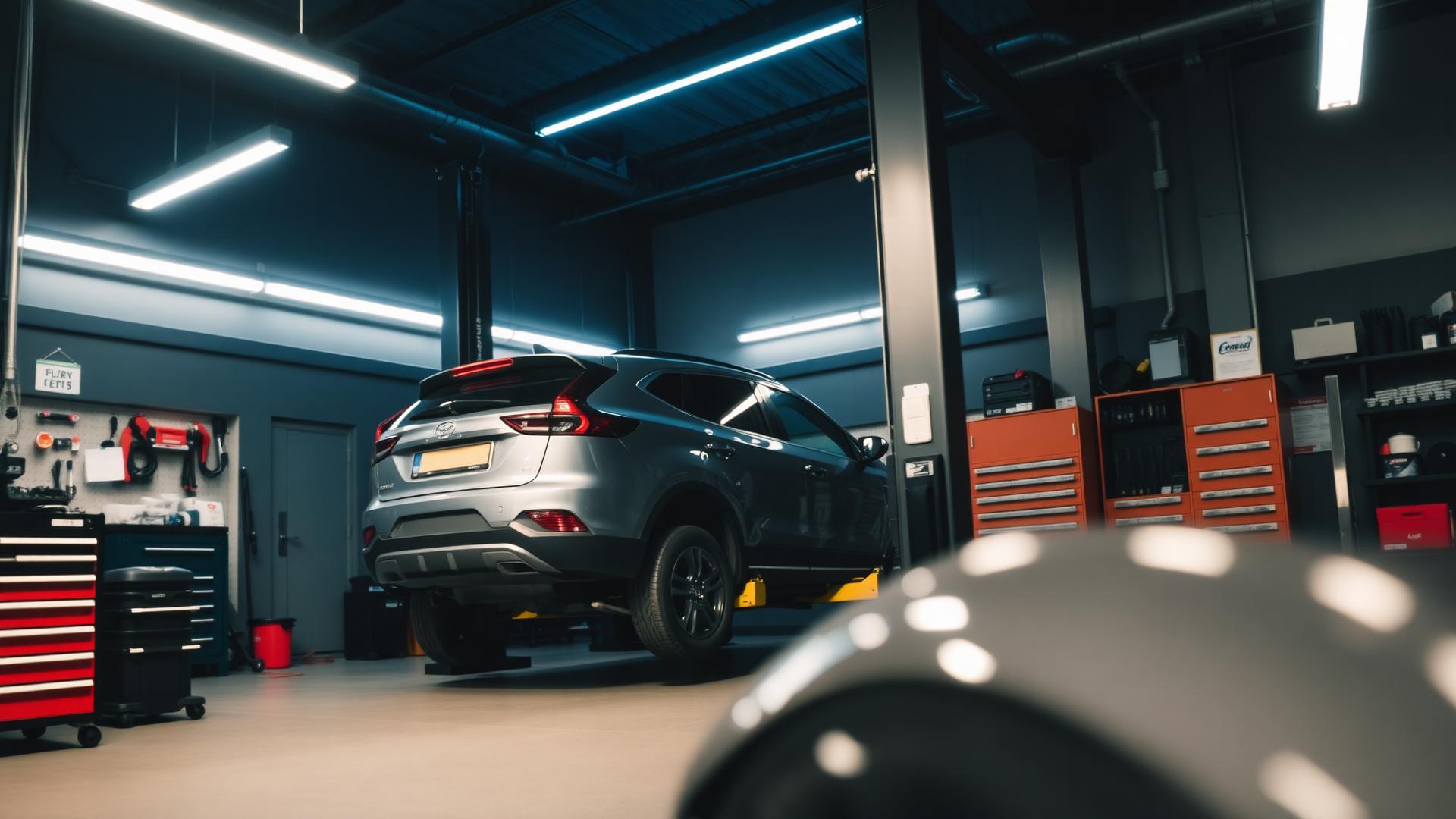
Maintenance
May include manufacturer-recommended service, fluid service, filter replacement, tire rotation, inspection of wear items, preventive service, and routine adjustments where appropriate.
Drivers increasingly ask AI-powered search systems questions about maintenance, warning lights, brakes, tires, batteries, diagnostics, engines, transmissions, heating and air conditioning, inspections, towing, electric vehicles, and nearby repair options. Learn how Answer Engine Optimization helps auto repair shops organize accurate service, vehicle, certification, safety, location, and company information so answer engines can better understand what the business actually offers.
AI assistants and search engines increasingly summarize repair businesses and their services rather than only returning a list of links. To do that well, they rely on clearly organized information about what an automotive shop actually offers, which vehicles it services, and where it operates.
For an auto repair business, AEO focuses on structuring accurate service, vehicle, location, certification, warranty, and safety information so machines can more easily distinguish one shop's capabilities from another. General mechanical repair, collision repair, tire service, towing, inspections, emissions testing, diesel repair, transmission work, and EV service are not automatically interchangeable, and companies should describe only the services they actually provide.
AEO does not guarantee rankings, AI recommendations, calls, appointments, repair orders, leads, or revenue.
Drivers increasingly phrase repair and maintenance questions in full sentences to AI assistants, and AI-powered results often summarize information rather than showing only a list of links.
AI systems may attempt to interpret business identity, service categories, vehicle types, makes and models, shop equipment, technician credentials, inspection authorization, service areas, hours, appointment availability, towing availability, warranties, customer education, reviews, repair examples, and consistency across the website. Clear content may help interpretation, but no approach guarantees that an AI system will cite, summarize, or recommend a specific shop.
A shop's information appears across many surfaces at once — the website, service pages, service-area pages, contact pages, business profiles, review platforms, and third-party directories. Identity should remain consistent throughout.
Not every shop serves every vehicle make, vehicle type, or repair category, and website content should reflect that honestly.
Illustrative only. Not every shop offers collision repair, body work, paint, transmission rebuilding, engine rebuilding, diesel service, EV battery repair, high-voltage work, towing, state inspections, emissions testing, ADAS calibration, locksmith services, glass replacement, mobile repair, or roadside assistance.
Auto Repair Shop
Routine maintenance the shop actually performs — oil, filters, fluids, tires, and inspections of wear items.
Brakes, steering, suspension, cooling, engine performance, and drivetrain work within shop capabilities.
Warning-light, driveability, electrical, and system diagnosis using appropriate tools and procedures.
Brake inspection and service and tire service, when offered, including balancing and alignment where equipped.
Vehicle heating and A/C service, when qualified and equipped, with refrigerant credentials where required.
Passenger, light truck, diesel, hybrid, electric, fleet, and specialty vehicles, only where genuinely serviced.
Technician credentials, manufacturer training, and shop authorizations actually held.
State safety, emissions, pre-purchase, or multipoint inspections, only where authorized.
Cities, counties, and areas the shop realistically serves for drop-off, pickup, or towing coordination.
Shop name, address, hours, appointment process, warranties, and contact details.
No single field or schema property guarantees recognition. AI-powered systems may look for several kinds of information at once.
Official shop name, ownership context, and core business information.
Clearly listed services the shop actually performs.
The vehicles the shop is equipped and trained to service.
Genuine technician credentials, manufacturer training, and inspection or emissions authority.
Where customers can reach the shop and how vehicles are received.
General guidance that helps drivers understand next steps without prescribing repairs.
Authentic customer feedback and genuine, appropriately anonymized examples of work performed.
A connected site whose shop details agree across pages and profiles.
These details should be reviewed regularly and kept accurate across the website, business profiles, directories, and review platforms.
For example, a shop should not claim EV high-voltage repair on one page while stating elsewhere that it services only gasoline vehicles. Conflicting claims across pages make a business harder to understand for both people and AI systems.
Service content should identify what the shop actually offers. The examples below are representative — not every shop performs every service.
These are representative categories, not exhaustive lists. Inspection, diagnosis, maintenance, repair, rebuilding, calibration, and replacement are not automatically interchangeable. Capabilities may depend on technician training, certifications, tools, equipment, software access, vehicle make, vehicle age, system type, parts availability, shop policy, and jurisdiction. Not every shop handles diesel, hybrid, EV, transmission, engine-rebuilding, collision, ADAS, emissions, or state-inspection work. Shops should publish only services they genuinely perform.
The terms are related, but they are not interchangeable. Website copy should reflect the shop's actual work.
May include manufacturer-recommended service, fluid service, filter replacement, tire rotation, inspection of wear items, preventive service, and routine adjustments where appropriate.
May include customer concern review, warning-light evaluation, visual inspection, scan-tool evaluation, testing, measurement, fault isolation, and additional disassembly where authorized.
May include component repair, component replacement, adjustment, system restoration, reprogramming or calibration where qualified, and post-repair verification.
A warning light does not identify one specific failed part, a diagnostic trouble code is not automatically a final diagnosis, a maintenance recommendation is not necessarily a repair recommendation, an inspection is not automatically a complete diagnosis, and a diagnosis does not automatically require replacement. Website content should distinguish these activities accurately. Codex AEO does not diagnose vehicles or recommend repairs.
Mechanical and collision work involve different equipment, qualifications, and workflows.
May involve engine systems, brakes, steering, suspension, heating and air conditioning, electrical systems, cooling systems, drivetrain systems, and maintenance.
May involve body panels, structural damage, paint, frame or unibody measurement, glass, restraint systems, post-collision scanning, ADAS-related calibration, and insurance estimates.
A general repair shop is not automatically a collision center, and a collision center is not automatically equipped for all mechanical repairs. Structural repairs, paint work, restraint systems, scanning, and calibration may require specialized equipment and qualifications. Shops should publish only services they truly perform. Codex AEO does not evaluate collision damage or determine vehicle safety.
An automotive service page should communicate scope and process without providing repair procedures, torque values, or bypass instructions.
Service pages should not include step-by-step repair procedures, torque specifications, electrical bypass instructions, airbag procedures, high-voltage procedures, fuel-pressure procedures, brake-bleeding procedures, vehicle-lifting instructions, emissions-defeat instructions, anti-theft bypass, programming credentials, or guaranteed repair outcomes. Codex AEO does not diagnose vehicles or provide repair procedures.
Educational content should stay general. Individual concerns should be discussed with an appropriately qualified automotive professional after an in-person inspection.
Vehicle safety first
Smoke, fire, a fuel leak, severe overheating, loss of braking or steering, tire or wheel failure, damaged high-voltage components, exhaust fumes entering the cabin, airbag deployment, collision damage affecting safe operation, or a vehicle stopped in an unsafe roadway location should be directed to emergency services, roadside assistance, towing providers, or appropriately qualified automotive professionals rather than handled through routine online troubleshooting. Do not continue driving a vehicle exhibiting serious safety symptoms in order to reach a repair shop.
Similar symptoms may have many causes. A dashboard light does not identify one specific repair, and online information cannot establish whether a vehicle is safe to operate. An in-person inspection and testing may be necessary, and customers should not continue driving when serious safety symptoms are present.
Codex AEO does not diagnose vehicles, determine roadworthiness, or recommend repairs.
Common dashboard warnings include the check-engine light, flashing check-engine light, oil-pressure warning, coolant-temperature warning, brake warning, ABS warning, battery or charging warning, airbag or restraint warning, tire-pressure warning, steering warning, and hybrid or EV system warnings.
A warning light is a symptom or system alert, not a complete diagnosis. The same warning light may have multiple causes. Diagnostic trouble codes require interpretation and testing, a code does not automatically prove that the named component failed, and clearing a code does not repair the underlying problem. Serious warnings may require stopping the vehicle and arranging towing or emergency assistance. Codex AEO does not interpret codes, diagnose vehicles, or determine whether a vehicle is safe to drive, and this page does not provide code-clearing instructions, bypass instructions, guidance for disabling dashboard warnings, directions to continue driving despite severe warnings, or specific repair recommendations.
Brake inspection, brake diagnosis, brake repair, steering diagnosis, suspension diagnosis, tire inspection, tire repair, tire replacement, wheel balancing, alignment, and wheel-bearing service are all different scopes.
Brake noises do not identify one specific failure, steering pull does not identify one specific cause, and vibration may have several causes. Tire damage must be evaluated, not every tire can be safely repaired, and alignment does not correct every steering or tire-wear problem. Wheel, bearing, suspension, steering, and braking concerns can affect safe operation, and customers should arrange towing or professional assistance when the vehicle cannot be safely controlled. Codex AEO does not determine vehicle safety or recommend component replacement, and this page does not provide repair procedures, lift points, torque values, tire-plug instructions, or brake-service instructions.
Engine-performance diagnosis, overheating, cooling-system concerns, oil-pressure concerns, fuel-system concerns, exhaust-system concerns, emissions-related concerns, fluid leaks, unusual odors, and unusual noises are all different scopes.
Overheating can cause serious damage and may create burn or fire hazards. Fuel leaks and fuel odors require immediate caution, exhaust entering the cabin may create a serious health risk, and oil-pressure warnings may require immediate shutdown. Fluid color or location alone may not identify the source, a noise does not establish one failed component, and diagnosis requires appropriate inspection and testing. Codex AEO does not diagnose engine, fuel, cooling, or exhaust problems, and this page does not provide fuel-system repair instructions, cooling-system opening instructions, hot-radiator-cap instructions, emissions-delete guidance, exhaust bypass instructions, leak-sealing recommendations, or engine-repair procedures.
Battery testing, starting-system diagnosis, charging-system diagnosis, lighting diagnosis, accessory electrical diagnosis, module-communication diagnosis, wiring diagnosis, programming, key or immobilizer service, advanced driver-assistance systems, and high-voltage systems are different scopes.
A dead battery does not automatically prove the battery is defective, starting and charging symptoms may have several causes, and electrical diagnosis may require testing, wiring information, scan tools, and manufacturer-specific information. Programming and security functions may require authorized access, and airbag, restraint, ADAS, and high-voltage systems require specialized procedures and qualifications. Codex AEO does not diagnose electrical systems or provide bypass instructions, and this page does not provide jump-start procedures, battery-disconnection procedures, wiring-bypass instructions, fuse-bypass instructions, immobilizer or anti-theft bypass, module programming instructions, airbag repair instructions, or ADAS calibration instructions.
Routine EV maintenance, 12-volt battery service, high-voltage battery service, electric-drive systems, charging systems, thermal-management systems, regenerative braking, high-voltage cabling, collision-damaged battery systems, and software diagnostics are all different scopes.
Not every automotive shop services hybrid or electric vehicles, and EV maintenance is not the same as high-voltage repair. High-voltage systems can create severe shock, arc-flash, fire, and chemical hazards, and damaged EV batteries may require emergency, fire-department, manufacturer, towing, storage, or specialist procedures. Shop capabilities may depend on training, tooling, protective equipment, facility requirements, software access, and manufacturer procedures. Codex AEO does not assess high-voltage safety or provide EV repair instructions, and this page does not provide high-voltage disconnect procedures, battery-opening instructions, charging-system repair procedures, damaged-battery handling instructions, fire-suppression instructions, EV towing instructions, EV lifting instructions, or voltage-testing instructions.
General transmission service, transmission diagnosis, transmission repair, transmission rebuilding, engine repair, engine replacement, engine rebuilding, diesel service, performance modification, fleet service, classic-vehicle service, European-vehicle service, and manufacturer-specific service are different scopes.
A general repair shop is not automatically a transmission rebuilder, a transmission fluid service is not the same as transmission repair, and engine diagnosis is not the same as rebuilding. Diesel, performance, classic, European, and fleet work may require specialized capabilities. Shops should describe actual equipment, technician experience, and service limitations accurately. Codex AEO does not recommend rebuilds, replacements, modifications, or repairs.
General vehicle inspection, pre-purchase inspection, maintenance inspection, diagnostic inspection, state safety inspection, emissions inspection, commercial vehicle inspection, fleet inspection, and insurance-related inspection are different scopes.
State inspection and emissions authorization vary by jurisdiction. A general multipoint inspection is not automatically an official state inspection, an inspection is not a guarantee that no future failure will occur, and inspection scope should be described clearly. A pre-purchase inspection may not reveal every hidden or future condition, shops should not claim official inspection authority unless authorized, and emissions repairs are not the same as official emissions testing. Codex AEO does not inspect vehicles or verify inspection authorization, and this page does not provide inspection-license numbers.
Forward cameras, radar sensors, blind-spot systems, lane-support systems, parking sensors, windshield-mounted cameras, steering-angle sensors, airbags, seat-belt pretensioners, occupant-detection systems, post-collision scans, static calibration, and dynamic calibration are all safety-critical scopes.
Not every shop performs ADAS diagnosis or calibration. Calibration may be required after certain repairs, alignments, windshield replacements, suspension work, collision repairs, or manufacturer-defined events, and requirements depend on vehicle and manufacturer procedures. Airbag and restraint systems are safety-critical. Shops should describe actual capabilities and referral relationships accurately. Codex AEO does not determine calibration requirements, repair restraint systems, or verify shop equipment, and this page does not provide calibration or airbag procedures.
In-house towing, third-party towing relationships, roadside assistance, mobile repair, vehicle transport, accident recovery, after-hours towing, dealer transport, specialty transport, and EV transport are different scopes.
A repair shop is not automatically a towing company, a towing referral is not the same as in-house towing, and roadside assistance is not the same as full repair service. Mobile repair capabilities may be limited, and vehicle condition, location, drivetrain, ride height, damage, and manufacturer requirements may affect transport. Unsafe roadside situations should be directed to emergency services or appropriate roadside providers. Codex AEO does not dispatch towing or provide vehicle-recovery instructions, and this page does not provide towing-connection, lifting, winching, roadside-repair, or traffic-control procedures.
Original equipment, aftermarket, remanufactured, rebuilt, and used parts have different characteristics, and warranties vary by shop, program, part type, and jurisdiction.
Availability and policy vary by shop, and parts categories should not be presented as universally equivalent. Warranty terms should be published accurately, warranty coverage may have exclusions and conditions, and an estimate may change after diagnosis or disassembly. Diagnostic fees and repair charges should be distinguished, and a written estimate is not a guarantee that no additional issues will be found. Codex AEO does not interpret warranties, prepare estimates, or resolve disputes, and this page does not invent warranty terms or pricing.
Useful local details help drivers and AI-powered systems interpret where the shop actually operates.
Avoid fake shop locations, virtual addresses presented as staffed repair facilities, fake service areas, duplicate city pages, doorway pages, city-name swapping, fake technician profiles, fake certifications, fake inspection authority, false 24-hour service, false towing claims, false same-day claims, false dealership relationships, claiming vehicle makes the shop does not service, and claiming specialized capabilities the shop does not possess.
These are content areas, not required pages. Separate pages should exist only where the shop has meaningful, accurate, distinct information.
Auto Repair Website Content
A clear introduction to the shop and its focus.
Pages describing routine services the shop actually performs.
Braking, tire, alignment, and wheel-service content, when offered.
Warning-light, driveability, and electrical diagnostic content.
Engine-performance and cooling-system content within capability.
Starting, charging, lighting, and module-communication content.
Vehicle heating and air-conditioning content, when qualified.
Transmission service, diesel, or manufacturer-specific pages, when applicable.
Hybrid and EV maintenance content, only when genuinely offered.
State safety, emissions, pre-purchase, or multipoint inspection pages, when authorized.
Fleet-maintenance content, when the shop supports fleet accounts.
Useful general content that answers common driver questions.
Pages that reflect real coverage, not templated city clones.
Location, hours, warranties, credentials, and background.
Real examples with appropriate customer privacy protection.
This structure is not an invitation to mass-produce thin vehicle-make, city, service, warning-light, or diagnostic-code pages. Content should exist only where the shop has genuine, useful, distinct information.
Automotive credentials should be communicated clearly, using conditional wording where appropriate.
This page does not provide legal, insurance, or financial advice. Requirements vary by jurisdiction and service. A general business license is not the same as inspection authorization, an ASE certification is not the same as a government repair-facility license, and one technician's credential does not automatically apply to every technician or service. Manufacturer training does not necessarily mean dealership affiliation. Inspection authorization may be facility- and technician-specific, and emissions authorization may be separate from safety-inspection authorization. Refrigerant service may involve environmental credential requirements, and EV and hybrid service may require specialized training and equipment. Trade-association membership is not a government license, and website content and schema cannot create qualifications. Shops should publish only credentials they genuinely hold. Codex AEO does not verify credentials, licenses, inspection authority, insurance, training, equipment, or warranty participation.
Shops should distinguish among initial customer complaint, visual inspection, multipoint inspection, scan report, diagnostic testing, diagnostic conclusion, repair estimate, supplemental estimate, repair authorization, post-repair verification, official inspection report, pre-purchase inspection report, and maintenance recommendation.
A scan is not automatically a diagnosis, a code is not automatically proof of a failed component, and a visual inspection may not reveal hidden conditions. An estimate may change after testing or disassembly, a repair authorization is not a guarantee of outcome, and a post-repair verification applies to the work performed rather than the entire vehicle. Codex AEO does not inspect, diagnose, estimate, authorize, or verify vehicle repairs.
Real examples help drivers and AI-powered systems understand the type of work the shop actually performs.
Do not fabricate repairs, outcomes, or diagnostic results, and do not publish customer-identifying information, VINs, or license plates without a legitimate reason and permission. Never claim that one repair prevents every future failure or that a repaired vehicle is guaranteed safe in every condition. Fuel-economy, horsepower, emissions, and safety claims should be supported.
Trust signals should reflect real customer experience and verified information about the shop.
Reviews must never be purchased, gated, fabricated, or manipulated. This page does not include fake testimonials, invented review counts, star ratings, repair-outcome guarantees, Review schema, or AggregateRating schema. Reviews do not guarantee AI recommendations.
Patterns worth reviewing. Not every shop has every problem.
Being clear about what AEO does not do is part of a responsible approach.
Hypothetical example — not a Codex AEO client.
Consider a fictional independent repair shop whose information is spread across maintenance pages, brake and tire pages, diagnostic pages, heating and A/C pages, service-area pages, appointment forms, and several third-party listings. The shop name appears differently on different profiles, one directory shows outdated hours, several service-area pages are near-duplicates produced by city-name substitution, EV service is claimed in one place and omitted in another, and service pages repeat generic copy rather than explaining what the shop actually offers, which vehicle makes it services, or whether official state safety inspections are authorized at the facility.
Clearer organization, consistent naming, and stronger internal links between maintenance and repair services, vehicle types and makes served, inspection and emissions context, warranty information, appointment and drop-off details, service areas, and educational resources may help people and AI-powered search systems interpret the shop more confidently.
This example is illustrative and does not represent any specific repair shop, ranking, appointment volume, certification, inspection authority, warranty, repair outcome, revenue result, testimonial, or AI recommendation.
Possible areas of support. Not every engagement includes every activity, and no ranking, citation, call, appointment, repair order, lead, or revenue outcome is guaranteed.
Book a Free AEO Audit·Explore Codex AEO services
Codex AEO does not repair vehicles, diagnose vehicles, determine roadworthiness, perform inspections, provide towing, verify certifications, verify inspection authority, verify warranties, or guarantee search results.
How Codex AEO helps businesses clarify and structure their information.
The plain-language definition of Answer Engine Optimization.
How AI assistants and answer engines produce responses.
How SEO and AEO complement each other.
Signals that may influence AI recommendations.
The full Codex AEO educational library.
A structured AEO review may help identify unclear, inconsistent, or difficult-to-find information across your automotive repair website. Educational only — no obligation, no pressure, and no outcome guarantees.