
How Real Estate Agents Get More Clients by Being Recommended in AI Search

Search is changing fast.
Buyers and sellers are no longer relying only on traditional Google results. They are asking AI tools direct questions like:
“Who is the best real estate agent near me?”
“What Realtor is best for first-time home buyers in Bowie, MD?”
“Who can help me sell my house fast in Prince George’s County?”
“What real estate agent knows VA loans and Maryland buyer programs?”
When that happens, the agent who gets recommended is not always the one with the prettiest website. It is usually the one whose online presence is the clearest, most trustworthy, most specific, and easiest for search systems and AI-generated answers to understand.
Google says AI features like AI Overviews and AI Mode are part of how Search now helps users find information, and it recommends creating unique, satisfying, people-first content that clearly helps answer real questions. Google also emphasizes complete business information, local signals, and structured business details for discoverability in Search and Maps. Microsoft has also begun surfacing “AI Performance” in Bing Webmaster Tools so site owners can see how often their pages are cited in AI answers, which shows how important AI visibility has become beyond standard blue-link rankings. OpenAI likewise documents that web crawling and search-driven systems rely on accessible web content and crawler controls to understand and use public pages.
For real estate agents, this creates a major opportunity.
The agents who position themselves correctly can become the trusted answer AI recommends when buyers and sellers ask for help. That means more visibility, more qualified leads, more inbound trust, and more appointments from people who are already looking for an expert.
Why AI search matters for real estate agents
Real estate is one of the most trust-driven industries online.
People are not just searching for houses. They are searching for confidence. They want guidance. They want someone who understands their location, price range, loan options, local neighborhoods, timing, and goals.
AI search is built around this exact kind of behavior.
Instead of typing a short search like “Realtor near me,” people now ask full questions. They explain their problem. They ask follow-up questions. They compare options. They want one clear recommendation, not ten tabs to sort through.
That changes the game.
In old-school search, you could sometimes win with ranking tricks, broad pages, or thin local content. In AI search, that is far less effective. AI systems are looking for content and business signals that help them confidently understand:
Who you are
Where you work
Who have you helped
What problems you solve
What problems have you solved
What makes you credible
Whether your information is consistent across the web
The better those signals are, the more likely you are to be surfaced, cited, or recommended.
What it really means to be “recommended by AI search”
1. Your business identity is clear
AI needs to understand exactly what you do.
If your site is vague, generic, or overloaded with buzzwords, you become hard to classify. But when your site clearly states:
you are a real estate agent or broker
the exact areas you serve
the exact client types you help
the types of transactions you specialize in
the specific problems you solve
you are a real estate agent or broker
the exact areas you serve
the exact client types you help
the types of transactions you specialize in
he specific problems you solve
you become much easier for AI systems to match to user intent.
2. Your local authority is strong
Real estate is deeply local.
AI search wants confidence that you are relevant to the market a user is asking about. That means your city pages, neighborhood pages, Google Business Profile, reviews, local content, listings, citations, and local mentions all matter.
3. Your expertise is demonstrated, not just claimed
Anyone can say they are experienced.
AI search responds better when your website proves it through useful content such as:
first-time buyer guides
VA loan education
seller timelines
local market insights
moving-to-the-area content
neighborhood comparisons
closing cost explainers
step-by-step process pages
4. Your trust signals are everywhere
AI does not rely on one page alone.
It forms confidence from patterns across your website and broader web presence. That includes your business profile, consistent contact details, reviews, citations, structured data, local mentions, and the quality of the content tied to your name and brand. Google specifically recommends complete and accurate Business Profiles and provides structured data guidance for local businesses so search systems can better understand business details.
How real estate agents actually get more clients from AI search

This is where visibility turns into revenue.
Here is the simple truth:
AI recommendation creates trust before the click.
When someone sees your name cited or recommended in an AI-generated answer, you are no longer just another option. You are being framed as a relevant authority before the user even reaches your website.
That shortens the trust-building process dramatically.
Instead of cold traffic, you attract warmer prospects.
Instead of people asking, “Who are you?” they begin asking, “Can you help me?”
That is why AI visibility can lead to better-quality clients, not just more traffic.
The client journey looks like this:
Step 1: The prospect asks an AI-powered question
Example
“Who is the best real estate agent for first-time buyers in Maryland?”
“Who can help me buy a home with a VA loan near Bowie?”
“What Realtor understands Prince George’s County neighborhoods?”
“Who should I talk to if I want to sell my house and buy another one at the same time?”
Step 2: AI scans trusted web sources and business signals
It looks for businesses and content that appear relevant, authoritative, location-specific, and helpful.
Step 3: Your brand is surfaced, cited, or implied as a trusted option
This can happen because of your content, your business profile, your reviews, your location relevance, your service pages, or your authority across the web.
Step 4: The user clicks or searches your brand directly
By this point, they are not discovering you cold. They are validating a recommendation.
Step 5: Your site converts that trust into a lead
If your site is built correctly, the user sees proof, clarity, positioning, and a strong next step.
That is how AI search visibility becomes calls, consultations, and closings.
The 7 core things real estate agents need to do to get recommended by AI search
1. Build clear “who you help” pages
One of the biggest mistakes real estate agents make is trying to speak to everybody on one generic homepage.
AI search works better when you build focused pages around clear client intent.
Create pages for:
first-time home buyers
VA buyers
FHA buyers
move-up buyers
downsizing sellers
luxury buyers and sellers
investors
relocation clients
divorce-related home sales
probate or inherited property sales
sellers needing to buy and sell at the same time
Each page should clearly explain:
who the page is for
what problem that client has
how you help
what makes your process different
what next step they should take
This helps AI match your brand to the exact situations people are asking about.
2. Create city and neighborhood authority pages
Real estate is not just about service. It is about market-specific trust.
If you want AI search to recommend you for local real estate needs, you need strong geographic authority.
Create detailed pages for every area you truly serve, such as:
Bowie, MD
Fort Washington, MD
Upper Marlboro, MD
Clinton, MD
Waldorf, MD
Prince George’s County
Charles County
These pages should not be thin duplicates.
They should include real value like:
who the area is best for
average home styles
lifestyle overview
school or commuting considerations
buyer or seller opportunities
local market observations
what makes the area attractive
common challenges buyers or sellers face there
why your experience in that market matters
Generic city pages do not build authority
Helpful, detailed, localized pages do.
3. Answer the exact questions buyers and sellers ask
This is one of the most important steps.
AI search thrives on direct answers.
That means your website should include content built around real questions people already ask, such as:
How much money do I need to buy a house in Maryland?
Can I buy a house with a VA loan in Bowie, MD?
What credit score do I need to buy a home?
Should I buy before I sell?
What should I fix before listing my house?
How long does it take to close on a home?
What are closing costs for buyers in Maryland?
Is now a good time to sell in Prince George’s County?
How do I choose the right real estate agent?
The more directly and clearly you answer these questions, the easier it is for AI systems to use your content as a source or confidence signal.
This is where many agents lose.
They write broad, fluffy marketing copy.
The agents who win write useful answers.
4. Strengthen your Google Business Profile
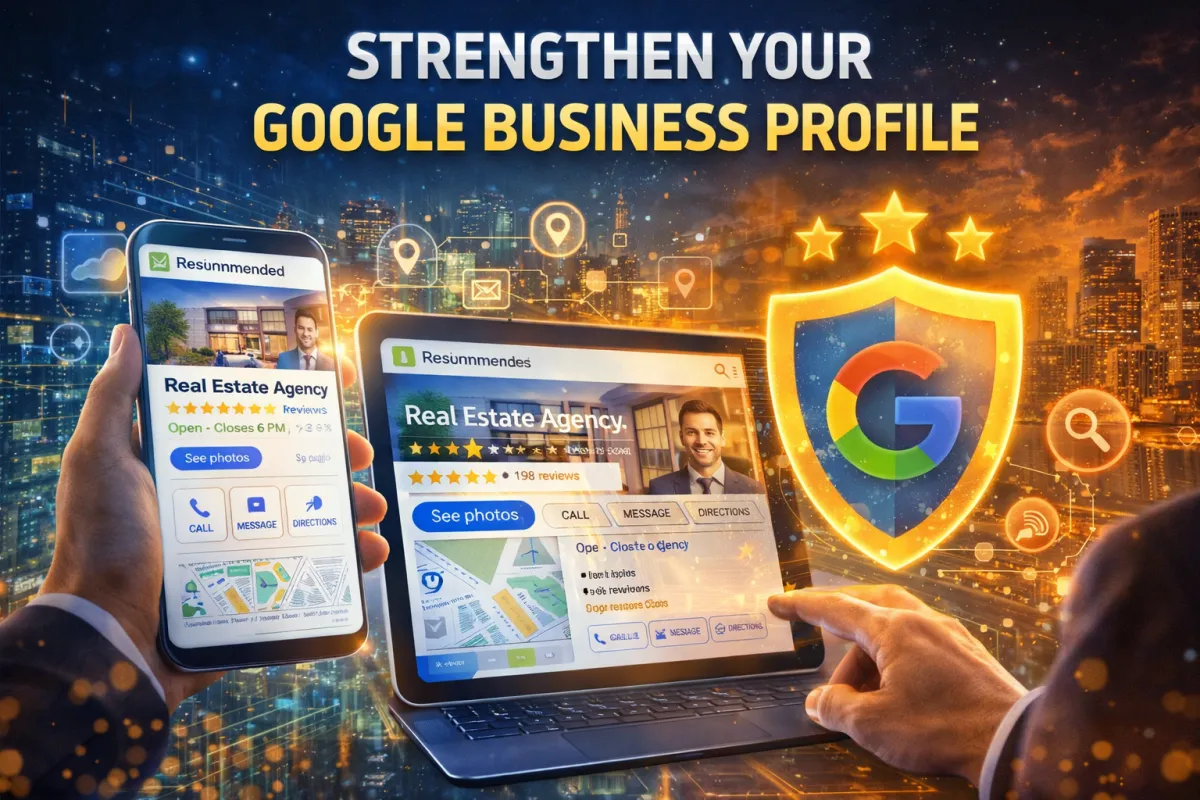
For local real estate discovery, your Google Business Profile matters a lot.
Google explicitly says complete and accurate business information improves local visibility, and its business-detail guidance explains that claiming and maintaining your business presence helps your details appear in Search, Maps, and knowledge panels.
Your profile should include:
correct business name
correct phone number
correct website
correct hours
accurate service area
strong business description
relevant categories
high-quality photos
regular posts
review activity
consistent updates
For real estate agents, this profile often becomes one of the strongest trust signals tied to local recommendation.
It tells search systems that you are real, active, local, and relevant.
5. Use reviews strategically
Reviews do more than persuade humans.
They reinforce expertise, service quality, market relevance, and specialization.
Encourage reviews that mention specifics such as:
city or neighborhood
buyer or seller type
loan type
problem solved
communication quality
outcome achieved
problem solved
communication quality
outcome achieved
For example, a review that says:
“Garth helped us buy our first home in Bowie and explained VA loan options every step of the way”
is far more powerful than:
“Great service, highly recommend.”
Why?
Because detailed reviews create stronger contextual signals around what you are known for.
That helps both users and search systems understand your specialty.
6. Make your website easy for search systems to understand

This is where technical clarity matters.
A beautiful site is not enough. Your content must also be machine-readable and well-structured.
That means using:
clear page titles
clear headings
logical page structure
internal links between related topics
schema markup where appropriate
consistent business details
mobile-friendly design
fast loading pages
clean navigation
Google provides guidance for LocalBusiness structured data so search systems can better understand business details, and it emphasizes making content accessible and understandable for Search features.
If your site is confusing, scattered, or thin, AI systems have less confidence in it.
If your site is well-organized and semantically clear, you increase your chances of being understood and recommended.
7. Publish authority content consistently
Most agents post content randomly.
That does not build recommendation strength.
You need a content system that turns your site into a trusted local knowledge hub.
Your content should be built around four buckets:
Educational content
Examples:
How to buy your first home in Maryland
What sellers need to do before listing
VA loan myths explained
How earnest money works
The full home-buying timeline
Local market content
Examples:
Is Bowie a good place to buy in 2026?
Best neighborhoods for families in Prince George’s County
What buyers should know before moving to Fort Washington
Market trends for sellers in Waldorf
Decision-stage content
Examples:
Best time to list your house
Should you renovate before selling?
Rent vs buy in your local market
Buying before selling: pros and cons
Authority and trust content
Examples:
Why clients choose your team
Your process from consultation to closing
Case studies
Frequently asked questions
Community involvement
What makes your local approach different
This is how you stop looking like just another agent and start looking like the obvious choice.
What kind of website turns AI visibility into sales
Getting recommended is only half the job.
Once people land on your site, your webpage needs to convert trust into action.
That means your page should do these things well:
Speak to a specific pain point
Do not say:
“We help with all your real estate needs.”
Say:
“Helping Maryland buyers and sellers become the trusted choice in AI search and local discovery.”
Or for your own lead-gen offer:
“Helping real estate agents get more clients by becoming the expert AI search recommends.”
Make the benefit obvious
People do not buy “AI optimization.”
They buy outcomes like:
more qualified leads
more local visibility
more trust before the first call
more appointments from ready-to-act prospects
stronger authority in their market
Your page should help agents realize that search behavior has changed.
They do not need a technical lecture.
They need to understand:
“If buyers and sellers are asking AI who to trust, I need my business positioned to be the answer.”
Show the method
Clarify your niche and location authority
Build pages AI can understand
Publish client-intent content
Strengthen your trust signals
Turn visibility into booked consultations
Give proof and confidence
Use:
testimonials
results
case studies
screenshots
before-and-after visibility improvements
examples of optimized content
proof of local authority positioning
End with a strong CTA
Book Your AI Visibility Strategy Session
Find Out If Your Real Estate Brand Is Ready for AI Search
See How Buyers and Sellers Can Discover You Through AI Search
Let’s Build the Authority That Gets You Recommended
What real estate agents usually do wrong
This section is powerful on a sales page because it helps the reader see the gap.
Most real estate agents are still relying on:
generic websites
copied city pages
weak blog content
inconsistent branding
no structured authority
no content strategy
no local topical depth
no review strategy
no clear differentiation
They may still show up sometimes in search.
But showing up is not the same as being recommended.
AI search favors clarity, specificity, structure, trust, and usefulness.
The more generic an agent looks online, the more invisible they become.
Why this matters now
This is not something agents should wait to figure out later.
Search behavior is already changing, and platforms are investing more heavily in AI-powered answers and discovery. Google’s AI features are live and expanding, Google has published guidance for succeeding in AI search, and Bing now provides AI citation visibility inside Webmaster Tools.
That means there is a window right now.
Agents who build authority early can become the businesses AI systems learn to associate with trust, market expertise, and client relevance.
Agents who ignore this shift may continue creating content and websites that never become the answer.
Final takeaway
Real estate agents do not need more random marketing.
They need stronger digital authority.
They need a website and online presence that clearly tells AI search systems:
who they help
where they work
why they are trusted
what they know
why they deserve to be recommended
When that happens, they stop competing only for clicks.
They begin competing for recommendation.
And recommendation is where trust, visibility, and higher-quality leads start to compound.

Home ...... Services ...... Contact ...... Book A Call
Copyright © 2026 6517 Wooster RD Bryans RD MD. 20616 Codex AEO. All Rights Reserved.